The Rule Isn't Really About Age
Here is what almost nobody knows: the federal Fair Housing Act has no age protected class at all. An age restriction needs no federal permission slip. What a 55+ community actually needs is an exemption from a different prohibition — the ban on discriminating by familial status, meaning households with children.
That exemption comes from the Housing for Older Persons Act of 1995 (42 U.S.C. § 3607(b), implemented at 24 C.F.R. Part 100, Subpart E). Seen that way, the rest stops feeling arbitrary: every requirement below exists to prove the community really is what it claims, so that keeping families with children out is lawful rather than simply exclusionary. Note what the exemption does not cover — protections against discrimination based on disability, race, sex, religion and national origin apply in full.
The 80/20 Rule, Stated Correctly
People repeat the 80 percent figure and usually get the rest slightly wrong. The regulation requires that at least 80 percent of a community's occupied units be occupied by at least one person aged 55 or older.
Occupied — not total. Vacant homes drop out of the math entirely, which is why a community still in construction can qualify from its first closing. An owner who winters in Florida still counts.
Two requirements travel with the 80 percent, and they separate a real 55+ community from a marketing claim. It must publish and follow policies showing it intends to operate as 55+ housing, and it must verify occupancy at least every two years.
The Younger Spouse
So: your husband is 52. Federal law is on your side, though not in the way most people assume.
The regulation requires at least one occupant aged 55 or older per unit. One, not two. Your household counts toward the 80 percent, and your younger spouse puts nothing at risk.
But federal law only permits the community to welcome you — it does not require it. The words "spouse," "guest" and "visitor" appear nowhere in the federal regulations. What decides is the community's own recorded documents, and they vary. Some mirror the federal minimum; some set a higher floor. Read them before you fall in love with a kitchen.
Grandchildren, Guests and August
This one is a clean yes. The federal rules govern permanent occupancy, not visitation, and there is no federal limit on guest stays of any kind.
Most communities do set their own limit on consecutive guest days — and it lives in the rules and regulations rather than the deed, making it the provision most easily changed by a trustee vote. If long summer visits are part of how you picture retirement, ask for the current rules, not the brochure.
One myth worth putting down: a 55+ community may refuse permanent occupancy to a minor, but it is not obligated to. The regulations expressly allow a community to house families with children and keep its exemption. Communities that restrict every unit do so by choice.
Why 62+ Is a Different Animal
If you are also touring communities marketed as 62+, that is a materially stricter rule: they must be occupied solely by persons 62 or older, with narrow exceptions for long-standing residents and staff. No 80/20 allowance, no one-occupant rule. HUD's own example is a couple aged 62 and 59 who must be turned away at 62+ — and who qualify at 55+.
What Massachusetts Adds
Here is where buyers who have studied the federal rules still get surprised.
Unlike federal law, Massachusetts does protect age as a housing class, from age 18, under M.G.L. c. 151B, § 4. An age-restricted community therefore needs a state-law exception on top of the federal one — and the statute conditions that exception on the owner or manager registering biennially with the Executive Office of Housing and Livable Communities.
Two separate tracks, then: keeping children out follows the federal standard, which Massachusetts imports by reference, while restricting by age is state law and carries its own filing condition. It is a fair question to ask any Massachusetts 55+ community.
What 55+ Is Not
A 55+ community is not senior living and not assisted living. When Congress rewrote the law in 1995 it deliberately deleted the old requirement that such housing provide facilities and services for older residents — partly because tying the exemption to amenities priced lower-income seniors out. A 55+ community owes you no care, no meals, no nurse.
Assisted living residences in Massachusetts are a separate regulated category under M.G.L. c. 19D. A 55+ condominium is ordinary market-rate real estate with an age restriction and, usually, an association that handles the roof and the lawn. The clubhouse and pool exist because a developer chose to build them.
The Documents That Actually Answer Your Question
Every question above routes to the same place. The age restriction is not a government program — it is a private restriction recorded in the master deed and enforced by the association. Law only makes it lawful. So the answers live in paper:
- The master deed. M.G.L. c. 183A, § 8 requires it to state how units are restricted as to use. Normally where the 55+ restriction sits, and the hardest provision to change.
- The declaration of trust and bylaws. Governance, common expenses, restrictions on use.
- The rules and regulations. Where guest limits and age-verification procedures usually appear — and the easiest to amend, so ask for the current version.
- The 6(d) certificate. Under c. 183A, § 6(d) it certifies unpaid common expenses. It is a money document — it does not certify the community is validly 55+.
- The budget and reserves. Section 10(i) requires an adequate segregated reserve fund, but 67 percent of owners can vote to modify that, and no reserve study is required by statute.
One request almost nobody makes: federal law contemplates that a community will state in writing that it complies with the 55+ requirements. Ask for it. A community operating properly will produce it without hesitation.
The rules decide who can live there; the budget decides what it costs. For the tax rate, deed stamps, HOA fee and Title 5 picture in Rochester, see what it really costs to buy a 55+ home in Rochester, MA.
Frequently Asked Questions
Can my spouse live here if they're under 55?
Federal law permits it — one occupant aged 55 or older is enough for the unit to count toward the community's 80 percent. But permission is not a requirement, and the community's recorded documents control.
Can our grandchildren visit or stay?
Yes. Age restrictions govern permanent occupancy, not visits, and there is no federal cap on guest stays. Any limit comes from the community's own rules and regulations.
What exactly is the 80/20 rule?
At least 80 percent of occupied units must have at least one resident aged 55 or older. The community must also publish and follow 55+ policies and re-verify occupancy at least every two years.
Does a 55+ community have to ban children outright?
No. There is no federal age requirement on the remaining 20 percent, and a community may house families with children and still keep its exemption. Communities that restrict every unit are choosing to.
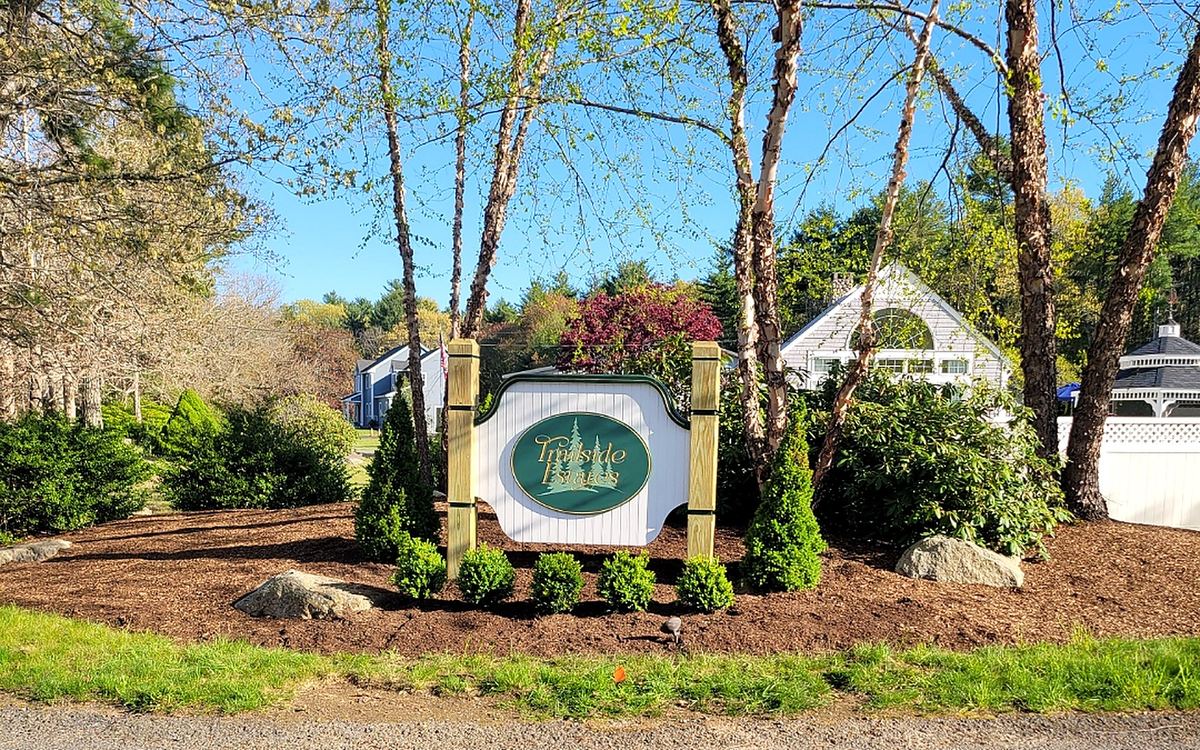
Are pets allowed at Trailside Estates?
Pets are permitted with restrictions, subject to Trustee approval and community rules.
Is this legal advice?
No — it is general information, current as of July 2026. Rules change and every community's documents differ. Tom Thomasian is a licensed Massachusetts attorney as well as a broker, and is glad to review a specific community's documents with you.
Bring us the hard questions.
Most people hesitate to ask whether their younger spouse, their dog, or their grandchildren are going to be a problem. Ask. It is the fastest way to find out whether a community actually fits the life you are planning — and we would rather answer honestly now than have you discover it at the closing table.